
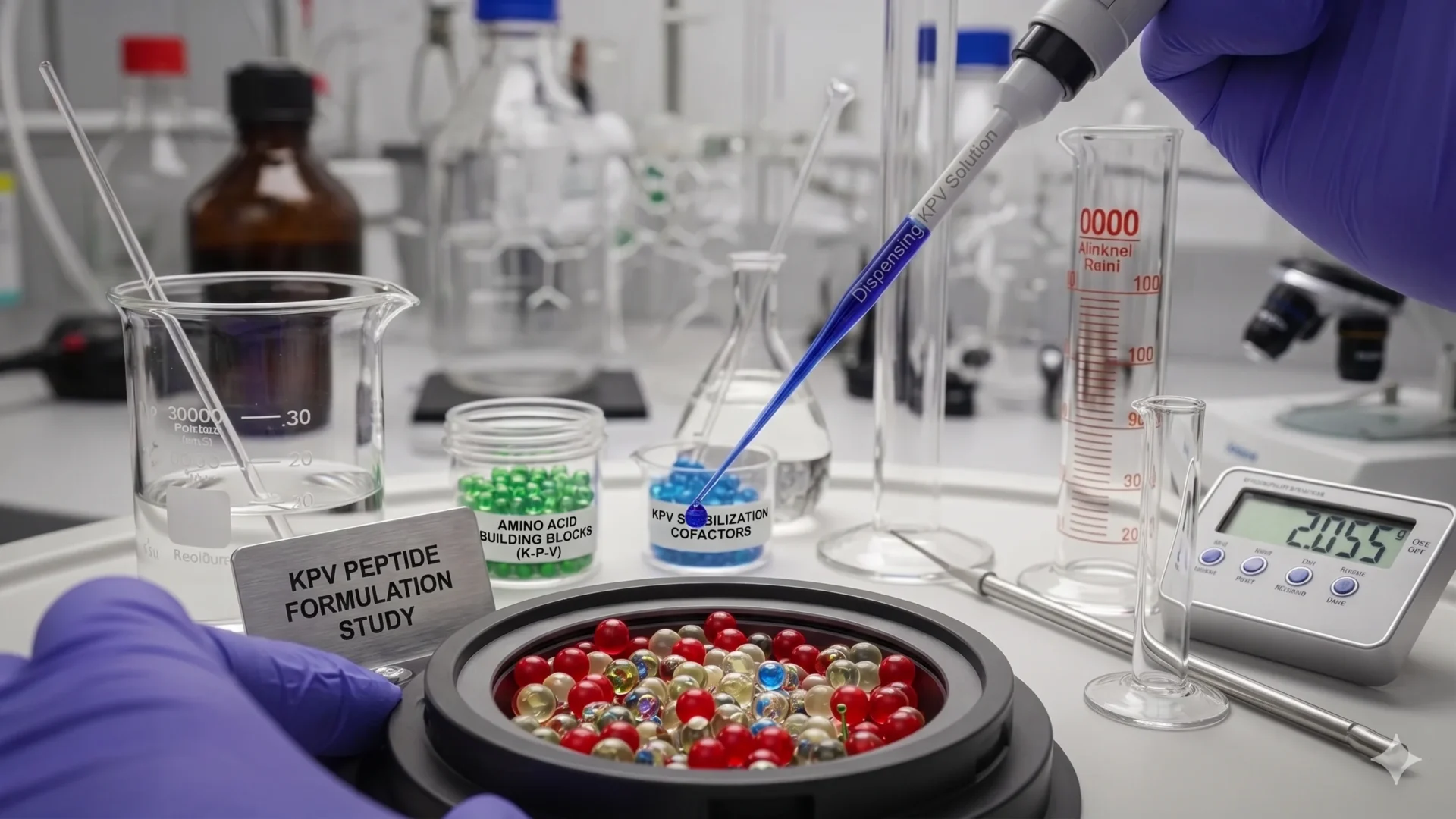
KPV peptide, a tripeptide composed of lysine (Lys), proline (Pro), and valine (Val), is gaining significant attention in the research community for its anti-inflammatory, antimicrobial, and wound-healing properties. Derived from the alpha-melanocyte-stimulating hormone (α-MSH), KPV has shown promise in preclinical studies for conditions like inflammatory bowel disease (IBD), skin repair, and gut barrier integrity.
This blog serves as a comprehensive guide to understanding KPV’s mechanisms, research applications, and laboratory protocols.
Scientific Background
What is KPV?
KPV is a naturally occurring fragment of α-MSH, a hormone known for its anti-inflammatory and immunomodulatory effects. The peptide’s small size and structure make it highly bioavailable, particularly when administered orally or topically.
Relationship to α-MSH
KPV retains the anti-inflammatory properties of α-MSH by targeting key inflammatory pathways, such as NF-κB inhibition, while being more stable and versatile for research purposes.
Mechanism of Action
NF-κB Inhibition and Cytokine Suppression
KPV works by inhibiting the NF-κB pathway, a critical regulator of inflammation. This suppression reduces the production of pro-inflammatory cytokines like TNF-α and IL-6, making it a potential candidate for treating chronic inflammatory conditions.
Antimicrobial Properties
Research has shown that KPV exhibits antimicrobial activity, particularly against pathogens like Staphylococcus aureus. This makes it a promising peptide for wound healing and infection prevention.
Oral Bioavailability via PepT1 Transporter
Unlike many peptides, KPV is orally bioavailable due to its ability to utilize the PepT1 transporter in the gut. This unique property expands its potential applications in gastrointestinal research.
Research Applications
1. Inflammatory Bowel Disease (IBD)
KPV has been studied in animal models of IBD, where it demonstrated significant reductions in inflammation and improved gut barrier integrity. Its ability to suppress cytokine storms makes it a promising candidate for further research in gastrointestinal disorders.
2. Wound Healing and Skin Repair
KPV accelerates wound healing by reducing inflammation and promoting epithelial cell migration. Its antimicrobial properties further enhance its effectiveness in skin repair studies.
3. Gut Barrier and Epithelial Integrity
KPV has shown potential in strengthening the gut barrier, reducing intestinal permeability, and preventing conditions like leaky gut syndrome.
4. Comparison with Other Peptides
When compared to peptides like BPC-157 and TB-500, KPV stands out for its dual anti-inflammatory and antimicrobial properties, as well as its oral bioavailability.
Laboratory Protocols
Handling and Storage
- Form: KPV is typically supplied as a lyophilized powder or in capsule form.
- Storage: Store at -20°C for long-term stability. Reconstituted solutions should be used within 7 days if stored at 4°C.
Reconstitution and Administration
- Reconstitution: Dissolve in sterile water or saline for injection.
- Administration Routes: Oral, subcutaneous (SubQ), or topical, depending on the research model.
Experimental Design Considerations
- Use appropriate controls to validate results.
- Ensure proper dosing and administration timing to mimic physiological conditions.
Dosage Information
Typical Research Dosing Ranges
- Oral: 1-5 mg/kg body weight.
- SubQ: 0.5-2 mg/kg body weight.
- Topical: Concentrations of 0.1-1% in a carrier gel or cream.
Protocol Examples
- IBD Models: Administer KPV orally for 7-14 days and monitor cytokine levels and gut histology.
- Wound Healing: Apply KPV topically to wounds daily and assess healing rates and microbial load.
Safety and Regulatory Notes
Preclinical Safety Data
KPV has demonstrated a favorable safety profile in preclinical studies, with no significant adverse effects reported at research doses.
Regulatory Status
KPV is classified as Research Use Only and is not approved for human or veterinary use. Researchers must comply with local regulations and ethical guidelines when handling and studying KPV.
Conclusion and Call to Action
KPV peptide represents a promising avenue for research in inflammation, wound healing, and gut health. Its unique properties, including NF-κB inhibition, antimicrobial activity, and oral bioavailability, make it a versatile tool for preclinical studies. As research continues to uncover its potential, KPV could pave the way for innovative therapeutic approaches.
Ready to explore KPV peptide for your research? Contact us today for high-quality KPV supplies and detailed laboratory protocols. Stay updated on the latest developments by subscribing to our newsletter!